
Rise of Mid-Budget Content-Driven Films: A Structural Shift in Indian Cinema
NovaEchoMedia Editorial
2 min read
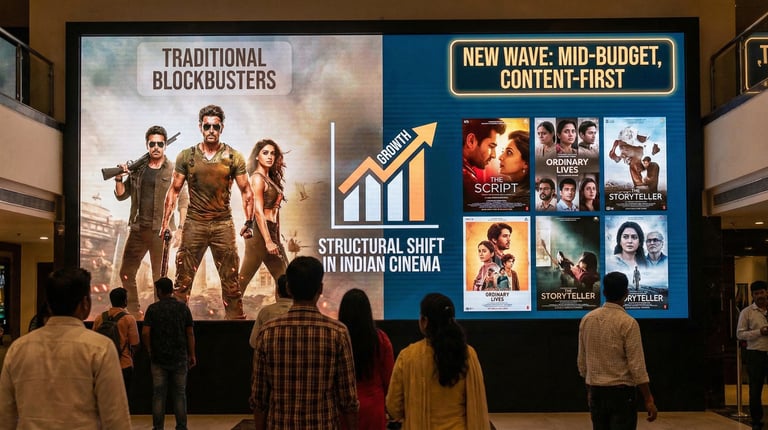
The Indian film industry is witnessing a noticeable and strategic shift toward mid-budget, content-driven cinema. While large-scale action spectacles and franchise films continue to dominate headlines, it is the steady performance of script-focused, character-driven films that is quietly reshaping the ecosystem.
This trend is not accidental. It reflects evolving audience preferences, changing distribution models, and a more disciplined production environment.
Audience Priorities Are Changing
Today’s viewers are more exposed than ever before. With global content readily available through OTT platforms, audience expectations have expanded beyond star-driven formulas.
Modern audiences increasingly value:
Strong screenwriting
Realistic characters
Emotional depth
Unique storytelling formats
Socially relevant narratives
Rather than relying solely on star power or visual scale, mid-budget films are focusing on narrative strength. When storytelling becomes the core driver, budgets can remain controlled without compromising impact.
The Economics of Mid-Budget Cinema
From a financial standpoint, mid-budget films offer a more balanced risk profile. Large-scale productions often require substantial marketing investments and high box office performance to break even. In contrast, content-driven films operate with controlled budgets and diversified revenue streams.
Revenue models now include:
Theatrical release
Streaming platform licensing
Satellite rights
International digital distribution
This layered monetization structure allows mid-budget films to achieve profitability without needing blockbuster-level openings.
OTT Platforms as Catalysts
Streaming platforms have significantly contributed to the rise of mid-budget cinema. OTT services prioritize engaging storytelling over theatrical spectacle, creating space for films that might previously have struggled to secure wide theatrical distribution.
Digital platforms have:
Encouraged experimentation with genres
Provided exposure to niche audiences
Supported debut directors and emerging actors
Increased demand for technically polished yet story-driven films
As a result, filmmakers are more willing to invest in scripts that prioritize originality over formula.
Creative Freedom and Script Development
Mid-budget filmmaking often allows greater creative freedom. Without the pressure of massive box office expectations, filmmakers can take narrative risks.
This has led to:
More character-focused storytelling
Exploration of unconventional themes
Stronger emphasis on writing and screenplay development
Greater representation of diverse voices
The growing importance of screenplay quality signals a maturing industry where writing is becoming central to production decisions.
Impact on Post-Production and Technical Standards
Even as budgets remain moderate, technical standards have risen significantly. Audiences expect polished visuals, balanced color grading, immersive sound design, and high-resolution mastering regardless of scale.
Post-production workflows now commonly include:
Professional color grading
Digital enhancement and cleanup
Advanced sound mixing
4K mastering for streaming platforms
The difference lies not in spectacle, but in precision. Mid-budget films are proving that strong storytelling combined with refined post-production can compete effectively in both theatrical and digital spaces.
A Sustainable Production Model
The rise of content-driven films contributes to a more sustainable industry model. Instead of relying heavily on a few high-risk mega projects, studios are diversifying their portfolios.
This diversification:
Reduces financial volatility
Encourages creative experimentation
Builds long-term audience trust
Supports emerging talent
A balanced ecosystem of big-budget spectacles and mid-budget narratives strengthens overall industry resilience.
Challenges Ahead
Despite growth, mid-budget films face certain challenges:
Limited theatrical screen allocation
Marketing budget constraints
Competition from high-visibility star vehicles
Discoverability in crowded digital libraries
Strategic marketing, strong word-of-mouth, and targeted distribution planning remain essential for success.
The Road Forward
The rise of mid-budget, content-driven films represents a structural evolution rather than a temporary trend. It signals that Indian cinema is embracing storytelling diversity and financial discipline simultaneously.
As audience sophistication increases and global exposure expands, narrative strength will continue to define success. Spectacle will always have its place, but substance is becoming equally powerful.
Indian cinema is no longer dependent on one formula. It is expanding its creative bandwidth and mid-budget films are at the center of that transformation.
Connect
Expert post-production for stunning visuals.
Contact
Join Our Newsletter
vikas@novaechomedia.com
+91-79774 48456
© 2025. All rights reserved.