
The Future of Film Restoration in the Age of AI
NovaEchoMedia Editorial
1 min read
Introduction
Film restoration has become increasingly important as studios and archives work to preserve cinematic history. Many classic films exist only on aging film reels that have suffered decades of damage. Today, artificial intelligence and advanced digital tools are transforming how these films are restored and preserved.
Why Film Restoration Matters
Film restoration is not just about improving picture quality. It is about preserving cultural heritage and ensuring that future generations can experience classic cinema as it was originally intended.
Old film materials often deteriorate due to environmental conditions, chemical degradation, and physical wear. Scratches, dust, flickering frames, and color fading are common issues that can make older films difficult to watch.
By restoring these films digitally, archivists and technicians can repair damage and bring historical media back to life.
Traditional Film Restoration Techniques
Before digital technology, restoration was an extremely time-consuming process. Film technicians had to manually repair damaged film reels and sometimes recreate missing frames using traditional photographic techniques.
Even with early digital tools, many tasks required frame-by-frame corrections. Removing scratches or stabilizing footage could take hundreds of hours for a single project.
How AI Is Changing Film Restoration
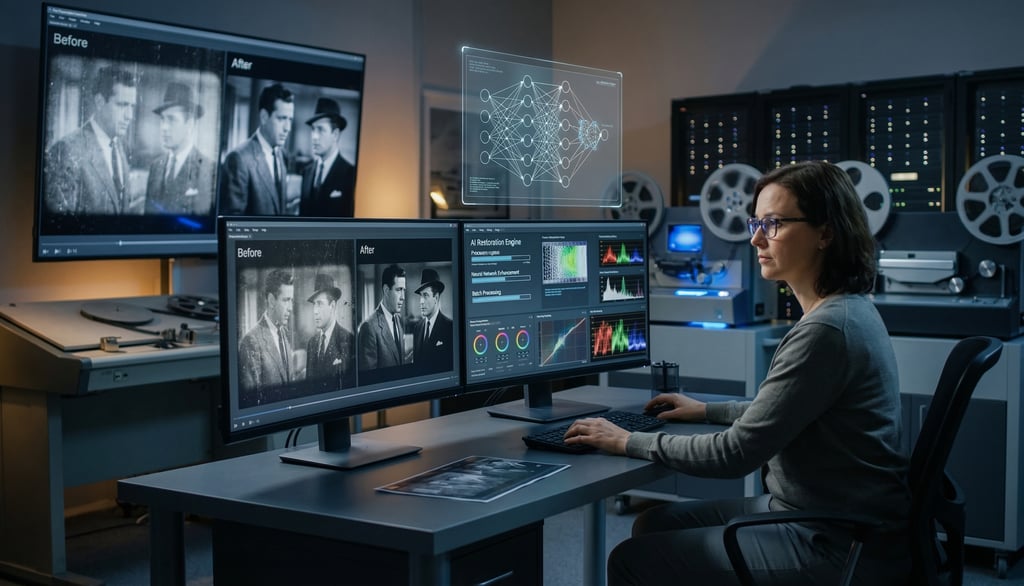
Artificial intelligence has dramatically accelerated the restoration process. Modern AI tools can analyze thousands of frames and automatically detect defects such as scratches, noise, and flicker.
Some AI systems can also reconstruct missing details and restore faded colors using machine learning models trained on large image datasets.
These tools allow restoration specialists to work faster while maintaining high-quality results.
The Role of Human Expertise
Despite technological advancements, human oversight remains essential. Restoration experts ensure that the original artistic intent of the film is preserved and that the final result stays faithful to the original production.
The Future of Film Archives
With AI-powered tools becoming more accessible, more archives and studios are expected to invest in restoration projects. This will help preserve classic films and expand the availability of restored content for streaming platforms and modern audiences.
Connect
Expert post-production for stunning visuals.
Contact
Join Our Newsletter
vikas@novaechomedia.com
+91-79774 48456
© 2025. All rights reserved.